Hybrid gets treated like a compromise, but in the data it's the most stable category.
Of the 4,959 postings analyzed, 17.4% were hybrid — a consistent figure across the 6-week window tracked. Unlike fully remote roles, which showed some volatility week-to-week, hybrid postings held steady. Companies offering hybrid aren't experimenting; they've landed on a policy and they're sticking to it.
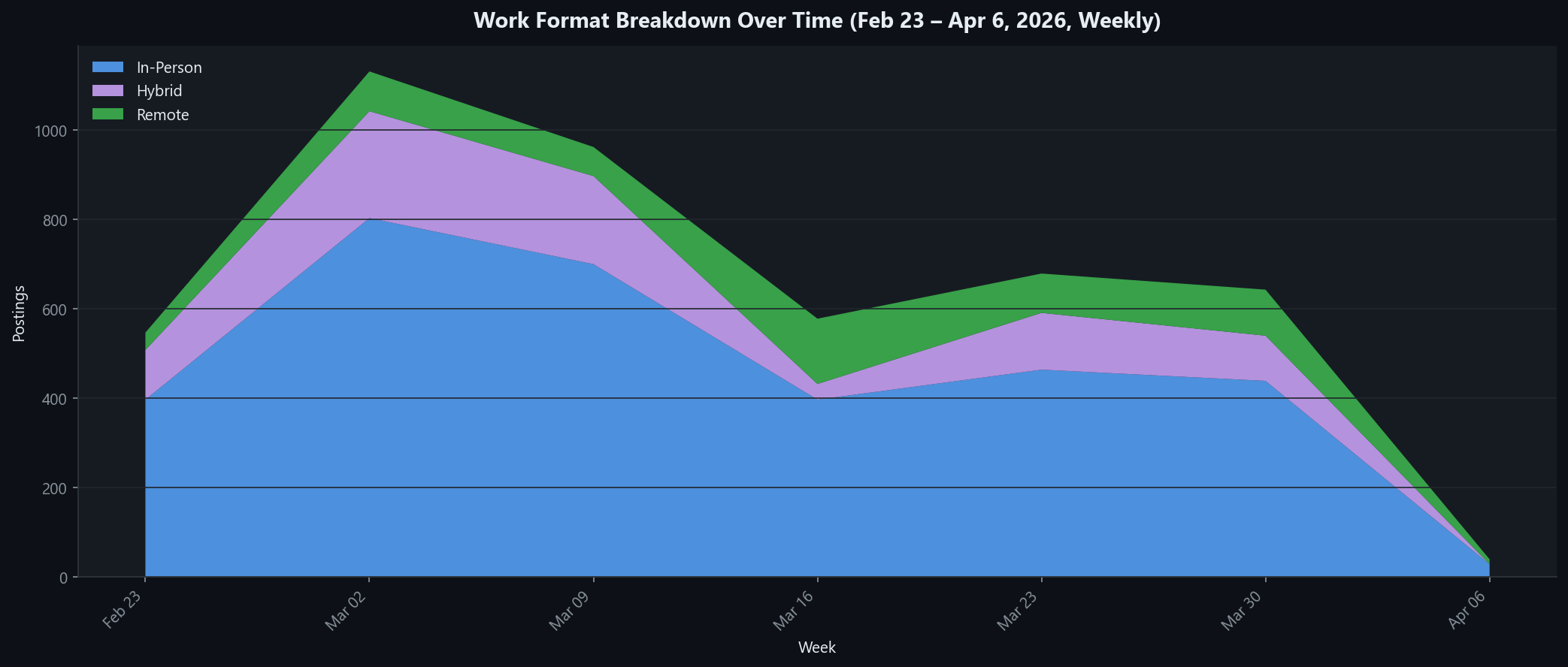
Weekly work format trends — hybrid remains flat while remote fluctuates
The hybrid profile
Hybrid internships tend to cluster in larger companies with established office infrastructure — places that have the physical space but have made permanent policy decisions to allow some remote flexibility. They're more common in finance, consulting, and large tech than in startups or smaller firms.
They're also more common in high cost-of-living cities. Companies in San Francisco, New York, and London are more likely to offer hybrid arrangements, possibly as compensation for the location premium they're asking interns to absorb.
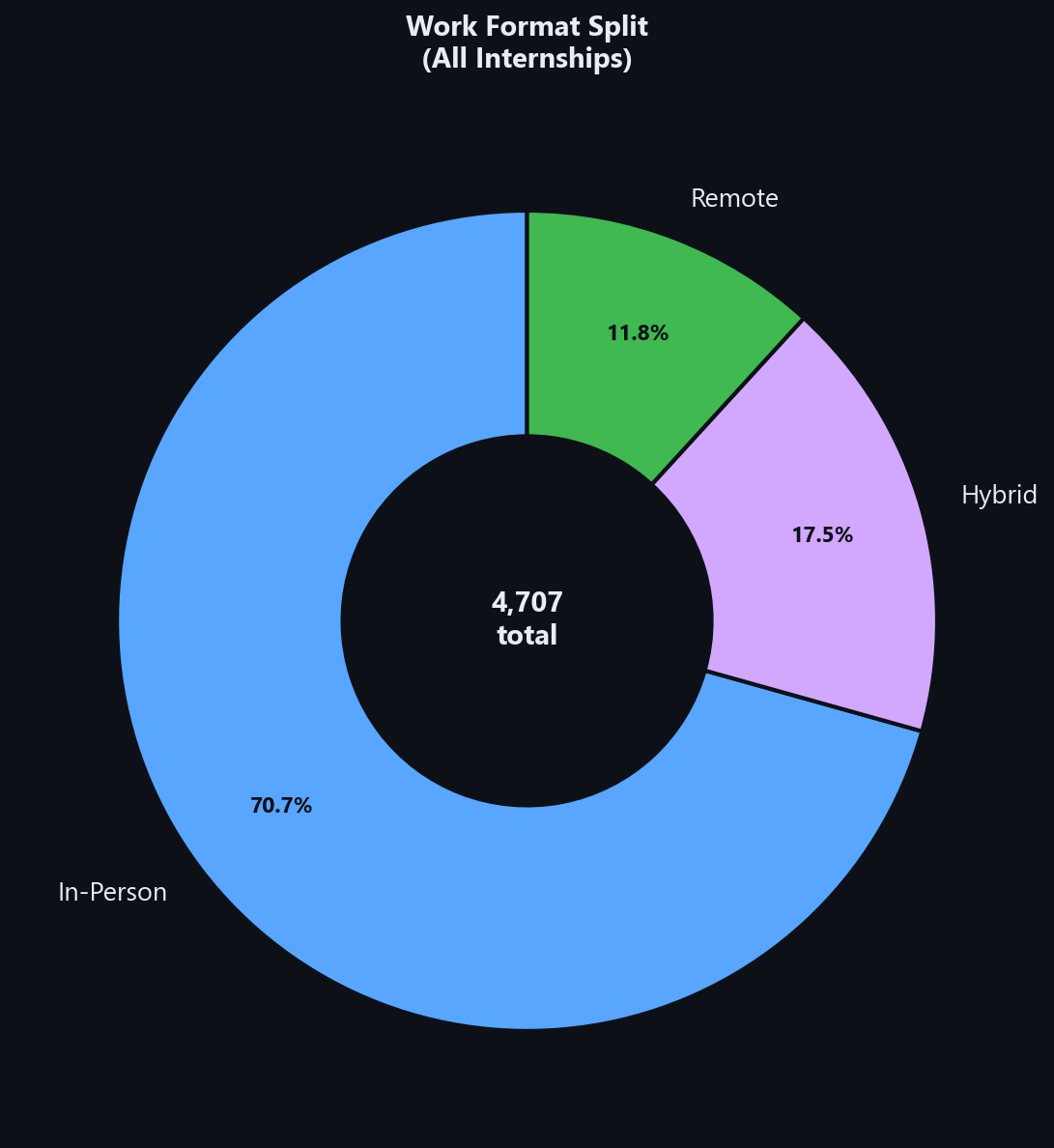
Hybrid sits at 17.4% — a stable minority between fully remote and in-person
Hybrid vs. remote in practice
For interns, hybrid often means 2–3 days in office per week, which requires local presence — you can't do a hybrid internship from another city. This makes hybrid postings functionally similar to in-person for anyone considering relocation.
If you're deciding whether to relocate, hybrid and in-person are basically the same call. You still need to be local.