Of the 4,959 internship postings analyzed, exactly 35 offer visa sponsorship.
For international students on F-1 visas or equivalent status in other countries, this number isn't just a statistic — it's a structural barrier that shapes the entire job search experience. The mainstream advice ("apply broadly," "network more," "tailor your resume") doesn't address the fact that 99.3% of postings are categorically unavailable to anyone who needs work authorization.
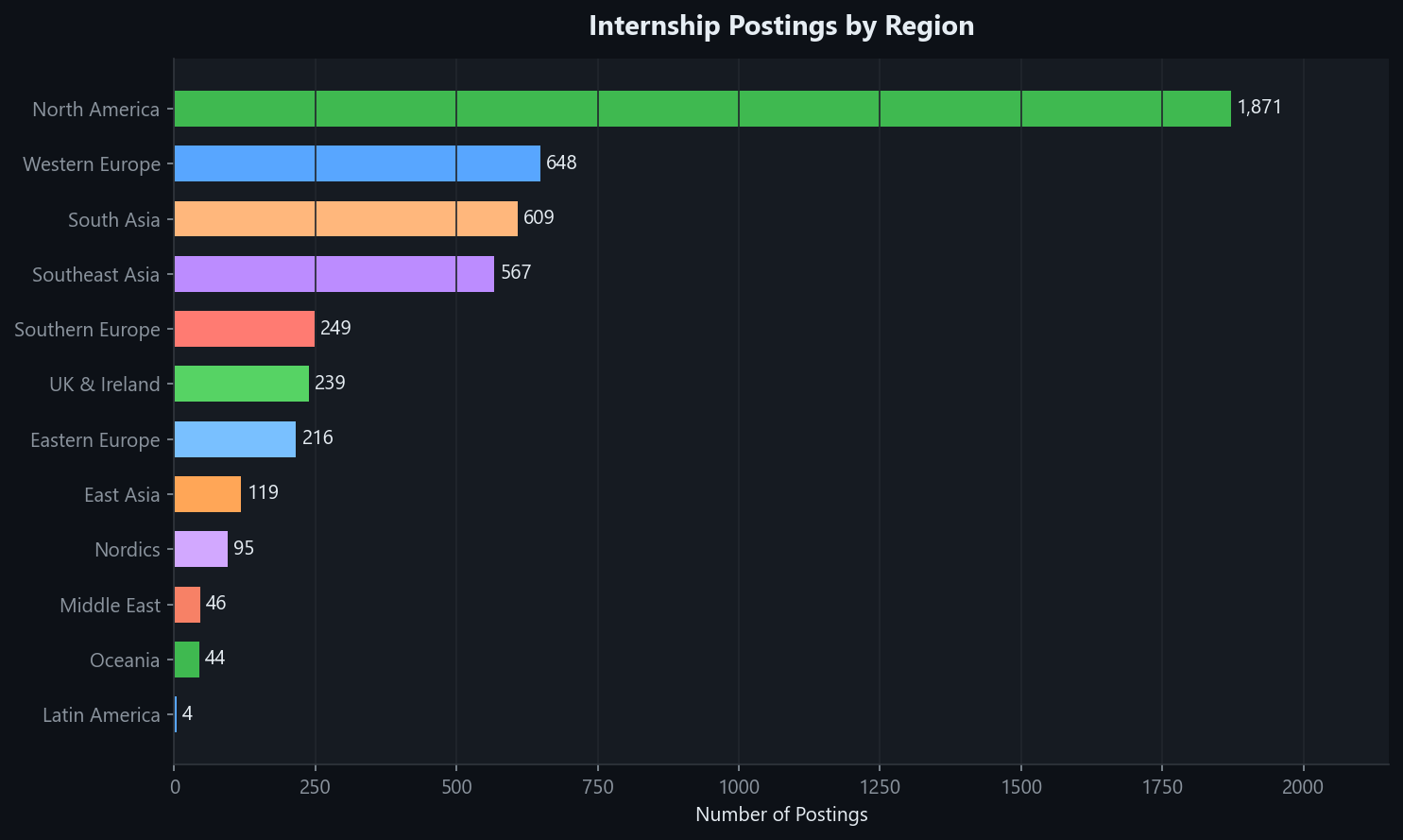
Regional distribution of postings — visa sponsorship availability varies significantly by geography
Where sponsorship does exist
The 35 sponsoring companies cluster heavily in large multinationals with dedicated immigration infrastructure — firms that already run H-1B pipelines and have legal teams equipped to handle OPT/CPT documentation. These aren't small companies taking a chance; they're organizations for whom sponsorship is a known, budgeted process.
The practical reality
International students should approach the internship market with a filtered list of known sponsors rather than applying broadly and hoping. The standard application funnel doesn't work when 99% of companies will screen you out on work authorization alone.
Lists of historically sponsoring companies exist. Start there, not with the general boards.
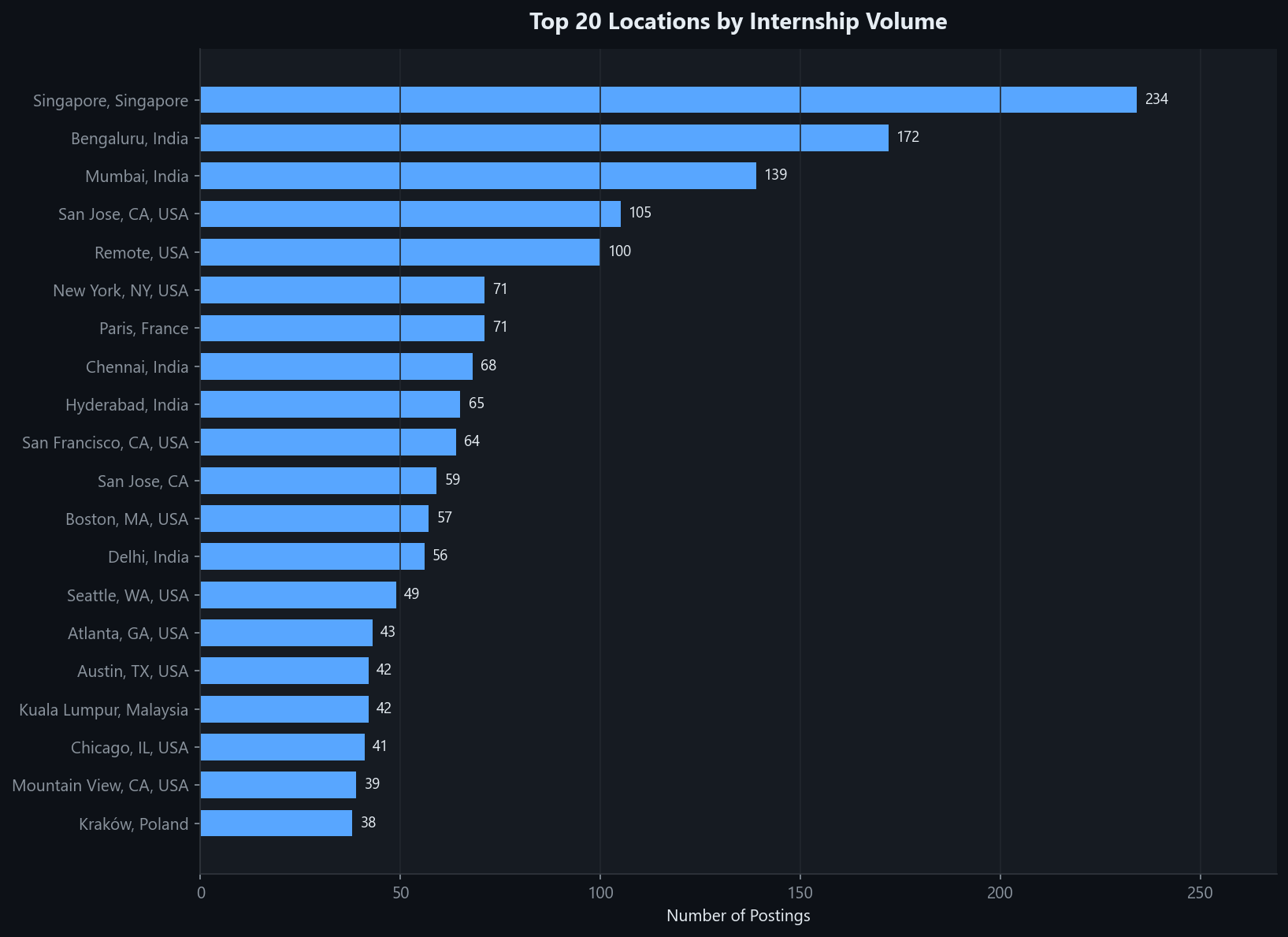
Singapore and South Asian cities offer disproportionately more opportunities for international candidates
The geography angle
This is also where the Singapore finding intersects. For students who are eligible to work in Singapore (many Asian international students are), the market is dramatically more open — Singapore doesn't have the same visa infrastructure bottleneck that the U.S. does.
The visa wall is largely a U.S. phenomenon. Global internship seekers have more options than the U.S.-centric conversation suggests.